Gobustan National Park Tour — Rock Art & Mud Volcanoes
65 km south of Baku · Gobustan National Park
About Gobustan
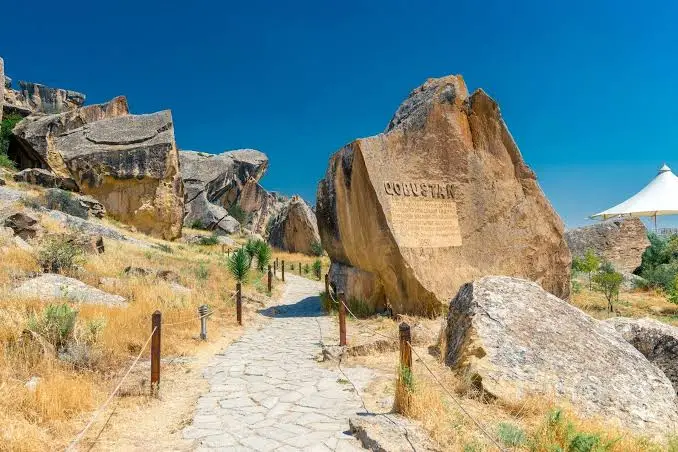
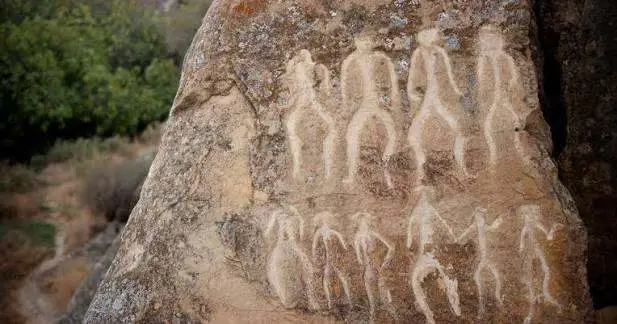
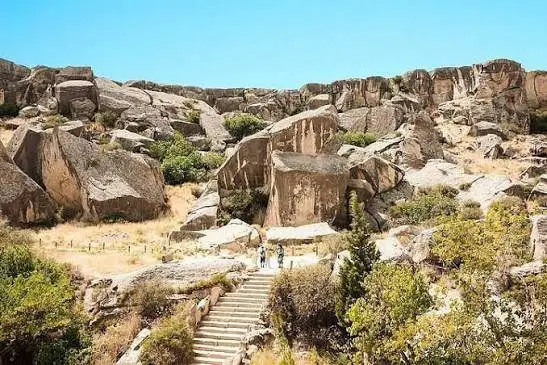
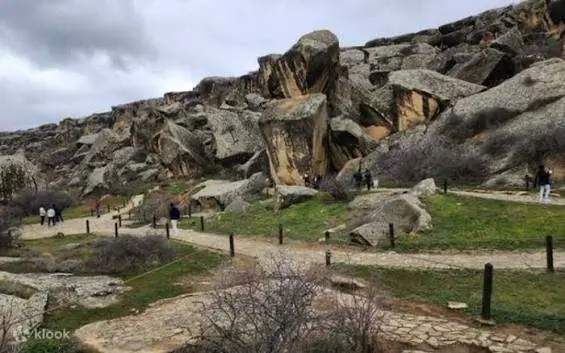
Gobustan National Park holds one of the world's most significant collections of prehistoric rock art — over 6,000 petroglyphs carved into rock, some dating back 40,000 years, depicting hunting scenes, boats, and ritual dancers. It's a UNESCO World Heritage Site and almost always visited as a half or full day trip from Baku rather than an overnight stay, given its proximity to the capital.
A brief history
Gobustan's petroglyphs were first seriously studied by archaeologists in the 1930s, though the carvings themselves span an extraordinary range of human history — some dated to as recent as a few thousand years ago, others estimated at up to 40,000 years old, making the site one of the most significant records of continuous human presence anywhere in the Caucasus or Caspian region. The site's UNESCO World Heritage designation in 2007 recognised both the sheer density of over 6,000 individual carvings and their exceptional value in understanding prehistoric settlement patterns and early human artistic expression.
The mud volcanoes near the main rock art site form through an entirely different geological process — underground gas deposits, often associated with the region's significant oil and gas reserves, pushing through soft sediment layers in a slow, continuous seep rather than genuine volcanic activity. Azerbaijan holds one of the highest concentrations of mud volcanoes anywhere on earth, and Gobustan's field is the most accessible and well-studied example, drawing serious geological interest alongside its tourist appeal. Beyond the main visitor areas, additional petroglyph clusters exist across the wider Gobustan reserve, though these typically require a knowledgeable local guide to locate and properly interpret.
Where to stay
Gobustan is visited almost exclusively as a half-day or full-day trip from Baku rather than an overnight destination, so there's no meaningful local accommodation to speak of — travelers stay in Baku and visit Gobustan as part of a day excursion, typically combined with the Absheron Peninsula's Ateshgah and Yanar Dag.
The adjacent mud volcano field adds an entirely different, almost lunar landscape to the visit — Azerbaijan has roughly a third of all the world's mud volcanoes, and the Gobustan field is the most accessible concentration. Most visitors combine the rock art and the volcanoes into a single excursion.
No overnight stays typically needed. Most visitors base themselves in a Baku hotel and visit as a half-day or full-day excursion from the city.
View Baku hotels